

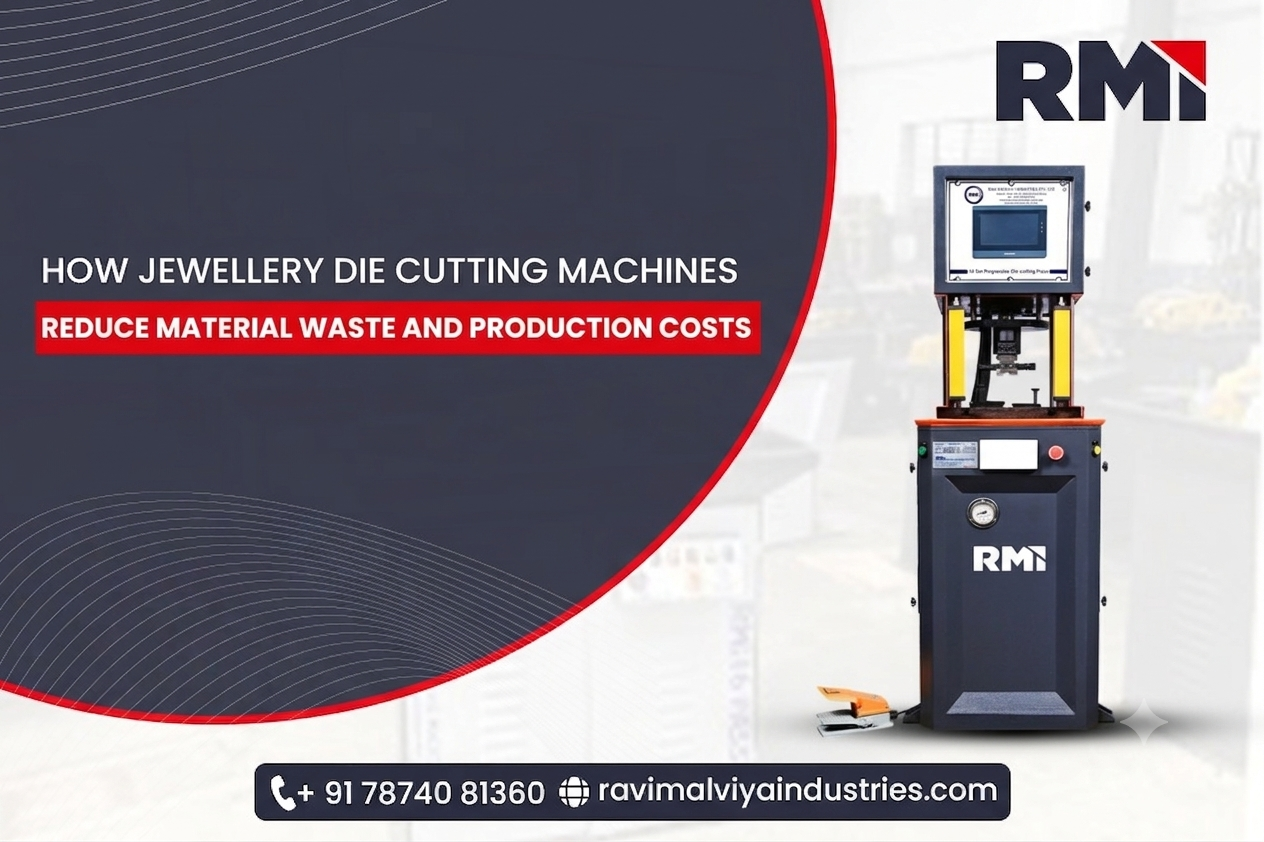
When it comes to jewellery making, precision in the process is not only important because of aesthetics; it also directly affects the cost of production. Any missteps in cutting may lead to waste of materials and extra time spent. This is where today’s jewellery die cutting machines are very useful since they offer high levels of accuracy in cutting.
For jewellery businesses handling high production volumes, investing in reliable cutting equipment can help reduce unnecessary expenses and improve productivity. Choosing an experienced jewellery die cutting machine manufacturer such as Ravi Malviya Industries can help businesses access machinery designed to meet the precision and efficiency requirements of modern jewellery production.
How Jewellery Die Cutting Machines Minimise Material Waste
Materials wastage forms one of the biggest problems in manufacturing operations. The traditional processes of cutting can be highly skill-dependent, and hence may give rise to inconsistencies such as inaccurate measurements, wrong cuts, or even damage to materials. Die cutting machines use a standardized cut pattern and thereby ensure consistency in the product.
The controlled cutting system helps maximize the useable area of the material. Precise positioning and cutting of the designs results in fewer scraps being thrown away. This is especially useful when using materials that are costly or have a special nature, since even small waste amounts will increase the total manufacturing cost.
- Precise and Consistent Cutting
One of the key advantages associated with the use of a die cutting machine is its precision. This is because the machine uses a pre-programmed pattern for the cutting process.
This prevents mistakes due to manual cutting and minimises the amount of time spent on rejecting wrongly manufactured pieces. Consistency is particularly important where manufacturers have to manufacture hundreds or thousands of jewellery components.
- Better Material Utilisation
Efficient material utilisation can have a noticeable effect on manufacturing expenses. Die cutting allows manufacturers to plan cutting patterns more effectively and use available material with greater efficiency.
By reducing unnecessary gaps and inaccurate cuts, businesses can get more usable components from the same quantity of raw material. Over time, this improved utilisation can contribute to lower material purchasing costs.
- Reduced Production Errors
Production errors can create hidden costs. A wrongly cut component may require rework or complete replacement, consuming additional material, labour, and machine time.
Jewellery die cutting machines help reduce such problems by providing repeatable cutting performance. Once the appropriate die and settings are established, manufacturers can maintain a consistent production process and reduce the frequency of defective components.
- Faster Production
Time is another important factor affecting manufacturing costs. Manual cutting can be slower, particularly when production involves large quantities or detailed components.
Automated and precision-based die cutting equipment can perform repetitive cutting operations more efficiently. Higher production speed allows manufacturers to complete larger orders within shorter production cycles without compromising cutting consistency.
- Lower Labour-Related Costs
Die cutting machines can reduce the amount of manual effort required for repetitive cutting operations. Instead of depending entirely on workers to measure and cut each component individually, operators can manage a more streamlined machine-based process.
This does not mean that there is no need for skilled labor. This means that the employees will be able to concentrate on operating machines, testing, and setting up rather than doing repetitive cutting jobs.
- Consistent Quality Means Less Rework
Quality issues have the potential to increase manufacturing costs due to rework and rejects. In the case of jewellery items, inconsistency in cutting may necessitate further finishing work.
Precision die-cutting ensures that consistency is maintained during the entire production process. Consistency could minimize any chances of making changes to the production process.
A Cost-Effective Approach to Jewellery Manufacturing
Reducing material waste does more than save raw materials. It can also reduce rework, improve labour efficiency, increase production output, and minimise delays. When these benefits are combined, the overall cost per component can be reduced.
For jewellery manufacturers looking to improve their production process, partnering with Ravi Malviya Industries, an experienced Jewellery Die Cutting Machine Manufacturer can provide the right cutting solution for achieving better material utilisation, consistent quality, reduced waste, and greater operational efficiency.
FAQs
- How does a jewellery die cutting machine reduce material waste?
A jewellery die cutting machine uses controlled and repeatable cutting patterns, helping manufacturers achieve accurate cuts and make better use of available material. This reduces incorrect cuts, rejected components, and unnecessary material loss.
- Can die cutting machines reduce jewellery production costs?
Yes. By improving material utilisation, reducing production errors, increasing cutting speed, and lowering repetitive manual effort, die cutting machines can contribute to reduced overall production costs.
- Why is precision important in jewellery die cutting?
Precision helps to ensure that the parts of a piece of jewellery retain uniform measurements and shape. This helps to prevent errors and minimize waste of materials.